
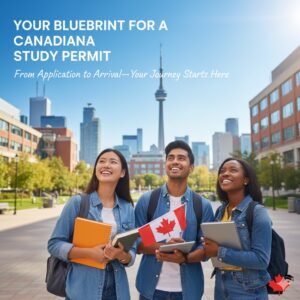
Study in Canada: The Ultimate Guide to Applying for a Study Permit
Ready to kickstart your academic journey in Canada? 🇨🇦
This essential guide demystifies the Study Permit application process providing clear steps, crucial tips, and common pitfalls to avoid so you can focus on your studies, not paperwork.
Why Study in Canada?
Canada has become one of the top destinations for international students — and for good reason.
Here’s why it stands out:
-
World-Class Education
Canadian universities and colleges consistently rank among the world’s best, offering globally recognized degrees and diplomas.
From technology and business to healthcare and arts, Canada provides a diverse range of academic programs. -
Post-Graduation Opportunities
After completing your studies, you may qualify for a Post-Graduation Work Permit (PGWP) allowing you to gain valuable Canadian work experience and even transition to permanent residency later. -
Safe & Multicultural Environment
Canada’s inclusive culture and welcoming communities make it a safe haven for students from all backgrounds. You’ll experience cultural diversity, supportive environments, and countless opportunities to grow personally and professionally.
Eligibility for a Canadian Study Permit
Before applying, ensure you meet the basic eligibility criteria set by Immigration, Refugees and Citizenship Canada (IRCC):
-
✅ Acceptance Letter from a Designated Learning Institution (DLI)
You must have a valid Letter of Acceptance (LOA) from a recognized DLI in Canada. -
💰 Proof of Financial Support
Demonstrate you have enough funds to cover tuition fees, living expenses, and return travel costs.
This can be shown through:-
Guaranteed Investment Certificate (GIC)
-
Recent bank statements
-
Scholarship or funding letters
-
Sponsorship proof (if applicable)
-
-
🧭 Intent to Leave Canada After Studies
You must convince the visa officer that you’ll leave Canada after completing your studies unless you later qualify for a work or residency permit. -
💊 Good Health & Clean Record
You may be required to undergo a medical exam and provide a police clearance certificate to show you’re admissible to Canada.
Key Application Components
A strong application increases your chances of approval. Make sure you prepare each document carefully.
1. Letter of Acceptance (LOA)
This is your official confirmation from a Canadian educational institution. Ensure it includes your name, program details, and institution’s DLI number.
2. Financial Proof
Provide evidence that you can afford your stay in Canada.
You’ll typically need to show:
-
One year’s tuition fee
-
Living expenses (CAD $10,000 for students outside Quebec)
-
Travel funds
For Student Direct Stream (SDS) applicants, a GIC of CAD $20,635 (as of 2024) is mandatory.
3. Statement of Purpose (SOP)
Your SOP is a personal essay explaining why you want to study in Canada, your chosen program, and how it aligns with your career goals.
Tips for a winning SOP:
-
Be genuine and concise.
-
Show how the program fits your academic and professional plans.
-
Emphasize your intent to return home after studies.
4. Supporting Documents
-
Passport (valid for the entire study period)
-
Medical exam results (if required)
-
Police certificate (if applicable)
-
Academic transcripts and certificates
Step-by-Step Application Process
Applying for a study permit can be done online through the IRCC portal. Here’s how:
-
Gather Required Documents
Prepare your LOA, proof of funds, SOP, and identity documents. -
Create an IRCC Account
Register on the Government of Canada website and start your application. -
Upload and Review Your Documents
Double-check every detail before submission inconsistencies can delay processing. -
Pay the Fees
Application fee: CAD $150
Biometrics fee: CAD $85 -
Submit Biometrics
You’ll receive a Biometrics Instruction Letter (BIL) after submission. Visit a Visa Application Centre (VAC) to provide fingerprints and a photo. -
Wait for Processing
Study permit processing times vary by country typically 4 to 12 weeks.
After Approval & Arrival in Canada
✈️ Understanding the Difference: Visa vs. Permit
-
Study Permit: Allows you to study in Canada.
-
Visa (TRV/eTA): Allows you to enter Canada.
You’ll usually receive both if you’re approved.
🧳 At the Port of Entry
Bring:
-
Your LOA
-
Study Permit approval letter
-
Passport and visa
-
Proof of funds
The border officer will verify your documents before granting you entry.
Conditions of Your Study Permit
While studying in Canada, you must:
-
Be enrolled full-time at a DLI.
-
Respect permit conditions (no unauthorized work or leave).
-
Renew or extend your study permit if your program continues beyond the expiry date.
💼 Working While Studying
You can work up to 20 hours per week during academic sessions and full-time during scheduled breaks, without a separate work permit (under eligible conditions).
Extending Your Study Permit
If you need more time to complete your studies:
-
Apply at least 30 days before your permit expires.
-
Provide proof of continued enrollment and financial support.
-
Maintain valid status while waiting for the decision.
Studying in Canada can open doors to world-class education, global networking, and exciting career paths. With proper preparation and attention to detail, your study permit application can be a smooth process.
Whether you’re applying through Student Direct Stream (SDS) or regular processing, remember clarity, consistency, and completeness are key.
Start early, stay organized, and soon you’ll be on your way to studying in one of the most welcoming countries in the world. 🍁